十万个冷笑话2
How a Chinese game scholar connects ancient texts with modern play_我的网站

A |
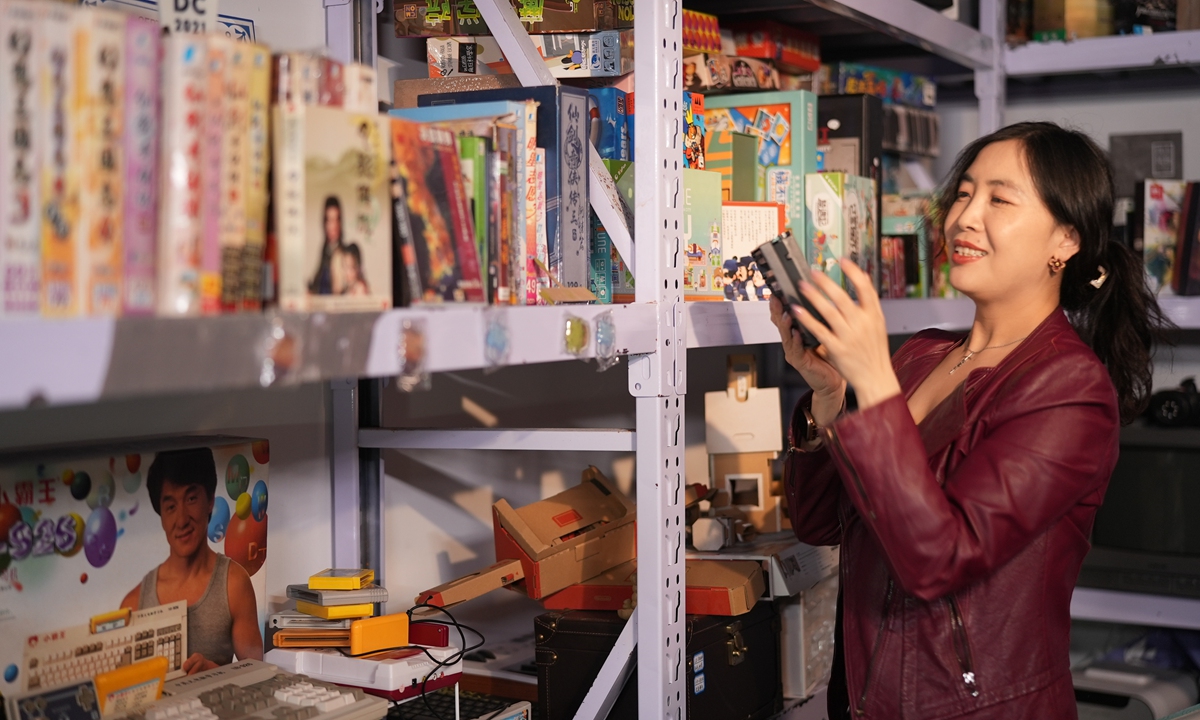
Liu Mengfei at Beijing's Homoludens Archive Photo: Courtesy of Liu Mengfei
Inside Beijing's Homoludens Archive, shelves are filled with books, game consoles, game cartridges and other materials tracing the history of video games. For Liu Mengfei, the archive's director and chair of the academic committee of the Gamification Professional Committee, these collections preserve more than the evolution of games, they also capture the cultural memories of a generation.
A PhD in history from Tsinghua University, Liu has spent more than a decade studying the social impact of games, the role of games in history and digital humanities. Throughout her career, she has continued to explore the relationship between games and people: Why do humans create games? And how do games shape culture and society?
Books, meanwhile, have been an important gateway through which Liu has come to understand the world of games.
"The real value of a book lies not simply in what it tells you, but in whether it can change the way you understand the world and people," Liu told the Global Times.
Books meet games
In 2007, being an undergraduate history student, Liu wrote her thesis on the links between ancient Celtic religion and modern digital games.
To study original sources such as The Gallic War by Roman author Julius Caesar, she taught herself Latin. As her research extended into modern games, she also began reading the rulebooks of Dungeons & Dragons, a tabletop role-playing game.
"From historical texts to game rulebooks, these reading experiences seemed to belong to completely different worlds, but they gradually led me to realize that games are not simply entertainment products. They also contain history, culture and the relationships between people and society," she said.
Later, Homo Ludens, by Dutch historian Johan Huizinga, further transformed the way she understood games. The book gives a theory that humans are not only Homo sapiens, or "rational beings," but also Homo ludens, or "playing beings," and that games are deeply intertwined with human culture, from language and art to religious rituals and sports.
The book had a profound influence on her. It points out that the foundations of human society — language, civilization, religious rituals, sports and art, are all connected to play and games, because we are Homo ludens, "the playing human."
"The idea prompted me to view games from a broader perspective," Liu said. "Games are not an appendage outside human civilization, but are deeply connected to cultural creation and social life."
"It also showed me that games and game-based thinking could extend into broader fields, including education and technology," she added.
She later read other works on game studies, including Play Between Worlds: Exploring Online Game Culture, Half-Real and Rules of Play Game Design Fundamentals. Play Between Worlds, in particular, opened up another possibility for game studies at a time when discussions about "internet addiction" were prevalent in China.
"Games are not simply a form of entertainment that needs to be restricted or criticize;. they can also serve as important media for storytelling, cultural expression and exploring relationships," she said.
These reading experiences gradually shifted Liu's focus from simply asking "What are games?" to a deeper question: What can games bring to people?
Beyond time and technologyPeriodically, Liu still returns to Homo Ludens in her free time, finding new insights from the book as society changes. In the age of artificial intelligence, she has revisited one of its fundamental questions: As AI becomes increasingly capable of handling repetitive tasks and surpasses humans in efficiency, what does it mean to be human?
"As AI takes over more monotonous and repetitive work, the time freed up should be devoted to creativity, experience and human relationships," she said. "The time we gain should actually be used to become better at 'playing humans.'"
For Liu, this also requires people to maintain their ability to think, imagine and reflect -- abilities that cannot be gained through simply receiving information. This has also prompted her to reconsider the meaning of reading.
In an era when AI can quickly summarize an entire book, Liu believes people still need to read the original works in full, because the value of reading lies in more than simply acquiring knowledge and conclusions.
"Reading a book is like a form of cultivation. You have to immerse yourself in it, patiently allow the author to take you on a journey, and find your own island along the way," she said.
For Liu, the value of reading is not limited to books on paper. As media evolve, so do the ways people encounter stories and understand culture. Some digital works are now becoming new vehicles for reading.
Chinese-developed games such as Genshin Impact contain hundreds of thousands, and even more than a million Chinese characters of text, while Black Myth: Wukong uses its "Journal" system to tell the stories of individual monsters through written entries.
"Digital games are carrying forward traditions inherited from literature and film, becoming new gateways, through which young people can enter the worlds of literature, history and traditional culture," she said.
"An important reason why Black Myth: Wukong has succeeded in communicating Chinese culture is that it does not simply insert traditional cultural symbols into a game. Instead, it draws on the original Journey to the West, contemporary works inspired by the classic, as well as the game's own rules and interactions, allowing players to develop a new understanding of traditional culture through their actions," she noted.
For Liu, the forms of reading may change, but the desire to understand the world and discover oneself will not. From books to digital worlds, what matters is not only what people read or play, but how they think, create and find meaning through these experiences.
。 天气渐冷,又到了选购羽绒服的季节。市面上羽绒服种类众多,价格不一,又涉及“含绒量”“绒子含量”“充绒量”“蓬松度”等专业指标,消费者应该怎么选呢?哪些指标值得注意?哪些品牌曾被监管部门抽检出不合格?近期,《消费者报道》整理了国家市场监督管理总局及各省市级市场监督管理局于近3年发布的羽绒服抽检情况。

B | 近三年羽绒服抽检合格率不足八成。结果显示,2022年1月—2024年12月,监管部门共抽检羽绒服2006批次,发现514批次不合格,不合格率为25.6%,其中鸭鸭、迪卡侬、恒源祥等品牌上榜,不合格项目主要为纤维成分及含量、绒子含量、含绒量、充绒量等。514批次羽绒服不合格,涉及鸭鸭、迪卡侬、恒源祥等大牌根据2024年京东11.11全周期销售数据,10月14日晚8点至11月11日晚,女士羽绒服、男士羽绒服、皮草成交额同比增长翻倍。其中,女士羽绒服的销量增幅达到了惊人的135%。羽绒服卖得越来越好,但不合格情况依然让人揪心。据《消费者报道》统计,过去三年(2022年1月—2024年12月),国家市场监督管理总局及各省市级市场监督管理局共抽检2006批次羽绒服,其中514批次不合格,整体合格率约为74.4%。品牌方面,有不少大牌或相关生产企业的羽绒服被检出不合格的情况,包括鸭鸭、迪卡侬、恒源祥等部分批次羽绒服。热销品牌鸭鸭有2批次不合格2023年2月,湖南省市场监督管理局发布关于2022年第三批重点工业产品质量省级监督抽查情况的通报。通报显示,1批次标称由“鸭鸭股份公司”生产的“鸭鸭”羽绒服装(货号:YE2B604281Z)被检出不合格,不合格项目为充绒量。2022年8月,江苏省市场监督管理局发布关于LED照明产品等55种产品质量省级监督抽查情况的通报。通报显示,1批次标称由“鸭鸭股份公司”生产的“YAYA鸭鸭”羽绒服(货号:B58991)被检出不合格,不合格项目为含绒量、绒子含量、蓬松度。

C | 鸭鸭官网显示,鸭鸭品牌成立于1972年,已有52年发展历史,宣称是“中国羽绒服首创者”“中国第一件羽绒服的制造者”,产品涵盖男士、女士、儿童等人群。根据公开资料,2019年到2023年,鸭鸭羽绒服的GMV从8000万元飙升到近200亿元,大涨超百倍。近两年,鸭鸭频频在“代言人营销”上发力。

D | 据剁椒统计,2023年鸭鸭合作的艺人达11个,包括王一博、佟丽娅、海清、万茜、陈哲远、王鹤润等。

E | 2023年11月8日,鸭鸭官宣王一博成为其羽绒服首席代言人当日,鸭鸭达成线上全渠道交易总额达2亿+、抖音单日女装TOP1、全天猫服饰直播TOP1、天猫男装TOP1、天猫女装羽绒服TOP1、天猫男装羽绒服TOP1等多项“成就”。

F | 2024年11月,YAYA鸭鸭正式官宣王一博为其品牌全球首席代言人。

G | ▲YAYA鸭鸭官网记者注意到,在电商平台上,鸭鸭羽绒服的销量不错,定价颇为亲民,销量较大的几款羽绒服价格在109元~609元之间。例如,某款宣称为“王一博同款”的长款羽绒服价格为499元。《消费者报道》记者发现,这几款销量较大的羽绒服宣称的含绒量均为90%及以上,绒子含量为90%-95%。鸭鸭官网喊出的口号也是“天生骄傲,鸭鸭90绒”“90%高含绒量”。但从抽检结果来看,鸭鸭的不合格项目涉及含绒量、绒子含量等。

H | 就抽检不合格及“代言人营销”等问题,《消费者报道》给鸭鸭官方邮箱发去采访函,但截至发稿未收到回复。迪卡侬、恒源祥纤维含量指标不合格2023年2月, 杭州市市场监督管理局发布关于 2022 年第二批市级产品质量监督抽查情况的通报。通报显示,1批次标称由“迪脉(上海)企业管理有限公司”生产、受检单位名称为“迪卡侬(杭州)体育用品有限公司”的羽绒服装(羽绒服)被抽检发现不合格,不合格项目为绒子含量。2022年10月,山东省市场监督管理局发布2022年羽绒服装产品质量省级监督抽查结果。

I | 抽查结果显示,1批次标称由“迪脉(上海)企业管理有限公司”生产、企业名称为“迪卡侬(上海)体育用品有限公司淄博鲁泰大道分公司”的羽绒服(生产日期或批号为4396009)被抽检发现不合格,不合格项目为纤维含量。迪卡侬是全球知名的连锁体育用品品牌。公开资料显示,2003年迪卡侬进入中国,至2021年已遍布全国46座城市178家商场。2024年,全球品牌价值500强名单发布,迪卡侬排名第230位。

J | 在某电商平台的“迪卡侬旗舰店”上,迪卡侬的羽绒服售价从两百元到上千元不等,其中销量最高的一款羽绒外套价格为449.35元,总销量高达20万+。无独有偶,同样出现纤维含量指标不合格的还有“恒源祥”羽绒服。2023年2月,湖南省市场监督管理局 发布关于2022年第三批重点工业产品质量省级监督抽查情况的通报。通报显示,1批次标称商标持有人为“恒源祥(集团)有限公司/上海彩羊服饰有限公司”的“Fazeya恒源祥”羽绒服装(货号:caiyang-1212P23)被检出不合格,不合格项目为纤维含量。消费者对于“恒源祥”的认知可能来自于“恒源祥,羊羊羊”的广告。恒源祥官网显示,其创立于1927年的中国上海。2005年12月22日,恒源祥集团正式成为2008年北京奥运会赞助商。

K | 2024年 ,恒源祥再次签约成为国际奥委会官方正装供应商。目前,其产品涵盖绒线、针织、服饰、家纺、童装等大类。记者在电商平台上搜索“恒源祥羽绒服”发现,恒源祥羽绒服的销量并不高,销量大多为几十,售价从一百多到几百元不等。迪卡侬、恒源祥羽绒服被抽检通报的“纤维含量”不合格,该指标是什么意思呢?纤维含量指的是衣服所使用的纤维原料和比例,该指标主要考核服装实际的纤维成分及含量与标注是否相符。例如某款服装标注纤维含量为棉90%,实际检测结果为棉70%,标注与实测值不符。产品纤维含量标注不正确或不规范会影响消费者对产品价值、性能的判定以及维护保养方式的选择。纤维含量、绒子含量、含绒量是不合格重灾区《消费者报道》分析羽绒服抽检数据发现,不合格项目主要集中在纤维含量、绒子含量、含绒量上,三个项目的不合格次数之和约占不合格次数统计总和的7成。羽绒服最重要的性能无疑是保暖。羽绒服的保暖主要来源于里面填充的鸭绒或鹅绒。而鸭绒、鹅绒的充绒量(羽绒重量多少克)、含绒量(绒子、绒丝百分比)、绒子含量(绒子百分比)等直接决定了羽绒服的保暖性能。消费者应该如何理解充绒量、含绒量、绒子含量这三个指标呢?第三方检测机构一名负责羽绒服检测的工程师向《消费者报道》记者表示:“充绒量指的就是羽绒服中填充的全部羽绒的重量;含绒量指的是绒子、绒丝在羽毛羽绒中的含量百分比;绒子含量指的绒子在羽毛羽绒中的含量百分比。目前新国标中只有绒子含量要求,已经没有含绒量指标,绒子含量要求会更严格。

L | ”所谓绒子,就是长在鸭鹅等脖子到胸腹之间不含羽梗的毛,这部分的绒毛细、软、长,用来填充羽绒制品更保暖。

M | 对于消费者,可以留意羽绒服标签来辨别,充绒量在标签上通常用“克(g)”来标示,而含绒量、绒子含量的单位是百分比。一家国内羽绒服行业从业人员向《消费者报道》记者透露:“绒子含量等指标目前的检测过程还是以人工为主:检测人员需把样品中的绒子、绒丝、毛片、羽丝和杂质等通过人工方式分别拣出,计算绒子的含量百分比,分拣过程中可能出现人工误差。”▲羽绒服吊牌上的“绒子含量”和“含绒量”标称值得一提的是,2022年4月1日,羽绒服国家标准GB/T 14272-2021《羽绒服装》开始实施,代替2011年旧国标。新国标明确羽绒服标注“绒子含量”,以替代“含绒量”,并明确绒子含量明示值不低于50%的才算是羽绒服,同时也对绒丝和羽丝含量作出限制。例如,新国标GB/T 14272-2021《羽绒服装》规定,羽绒服产品的充绒量与明示值的偏差不小于-5.0%。绒子含量90%的羽绒服的绒子含量允许偏差≥-5%。《消费者报道》选购建议(1)认准标签的“充绒量”“绒子含量”“蓬松度”指标。

N | 充绒量、绒子含量、蓬松度的高低,直接影响羽绒服的保暖性。企业应明确标注填充物(如鸭绒、鹅绒)、充绒量、绒子含量以及执行标准代号等重要信息。(2)认准新国标GB/T 14272-2021《羽绒服装》。2021年3月9日,GB/T 14272-2021《羽绒服装》正式发布,并于2022年4月1日正式实施。新国标已经没有“含绒量”的定义,使用的是“绒子含量”指标。建议消费者选购时,认准新国标或绒子含量指标。(3)绒子含量以70%及以上为佳。绒子含量明示值不低于50%的才算是羽绒服,而绒子含量达到70%时,羽绒服装已具备较不错的保暖性能。羽绒的绒子含量数值尾数都是0或5,不存在100%的情况,如:80%、95%等。来源:消费者报道 B48。
Current article:http://ltzcgsz.cousizhegaobaolengkuo.bond/2rpt9p/20260826/83126.html
Published on:21:38:54